When American actor Geri Jewell was diagnosed with cerebral palsy at just 18 months old, few could have imagined that she would become a trailblazing, award-winning prime-time television sensation.
Similarly, My Left Foot autobiographer Christy Brown defied the odds to achieve international acclaim as one of Ireland’s most celebrated authors, painters, and poets.
But many children with cerebral palsy in developing countries like Malawi are denied treatment, care and support, including access to education.
The painful reality is all too familiar to Harriet Mandala, 40, who raises her 11-year-old child with impaired muscle coordination and disabilities caused by brain damage at birth.
The woman, from Traditional Authority Mwase in Kasungu District, states: “His peers are in Standard Five, but he has never stepped into a classroom.
“We struggle to provide proper care for the child.”
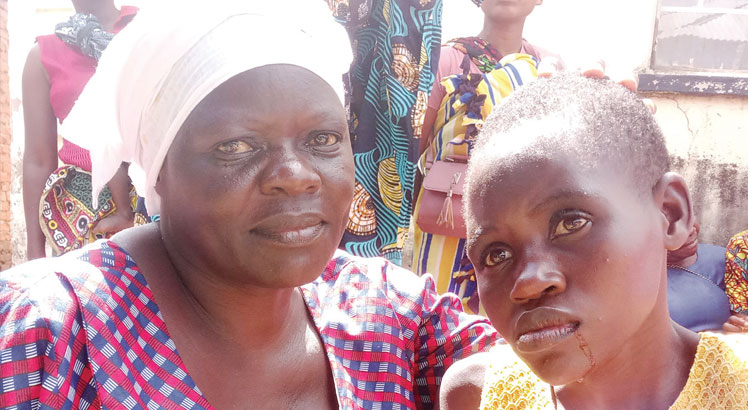
The family, which sells firewood, struggles to meet the child’s needs.
Similarly, Jessy Moyo, from the tobacco-growing district, has a 21-year-old daughter with cerebral palsy, seizures and gait disorder.
She attended Chankhanga SOS Primary School in Kasungu, but dropped out due to mobility challenges.
“It pains me that my child stopped going to school. All she needs is a wheelchair,” says the mother.
Some women suffer abandonment by men after birthing children with cerebral palsy. Instead of sharing responsibility, some men walk away or force the women out, accusing them of causing the disability.
Restoring hope
Uhuru Child Care provides community-based rehabilitation services such as physiotherapy, counselling, transportation and medical support for rural families raising children with cerebral palsy and other neurological conditions in Kasungu.
Mandala says the support has transformed her child’s life.
“Twice a month, I bring my son for physiotherapy. I want him to go to school and live like other children.
Authorities should take cerebral palsy seriously. My son’s condition has improved since he started treatment to enhance body movement. He now sits and crawls without much assistance.”
Founded in 2018, Uhuru Child Care seeks to restore dignity to children with disabilities.
Its founding leader Maulidi Kijangwa recounts: “I grew up in a community where several children with cerebral palsy were being hidden in homes—isolated, rejected and treated as a curse.
“I visited them almost every day to play, laugh and cry with them. Some eventually died due to lack of care and support. Their deaths affected me so deeply. As a young boy, I promised to dedicate my life to helping children with disabilities,” he says.
Today, the organisation supports 328 rural children in Kasungu.
Last year, it conducted over 650 physiotherapy sessions, distributed 39 mobility aids and reached 12 villages with essential information and services.
The not-for-profit organisation is mobilising more resources to expand access to physiotherapy, assistive devices, caregiver training and support as well as home-based rehabilitation follow-ups.
Kasungu Municipality member of Parliament Noel Mkubwi (independent) recently donated clothes, soap and foodstuffs for 150 children at the centre.
“We should not discriminate against children with disabilities. They are the future of our nation, so each one of us has a responsibility to care for them,” he says.
The lawmaker pledged to lobby for inclusion of women caring for children with cerebral palsy to benefit from the K100 million loan under the K5 billion Reformed Constituency Development Fund.
Group village head Kasalika urges men to embrace a shared responsibility as “it takes both a man and a woman to bear a child.”
“It makes no sense for one to disappear because the child has a disability,” he says.